
Many people in churches today focus on building their platform, influence, visibility, and popularity instead of letting God build the person behind it. Yet when we focus on developing the person, that is, our character, spiritual maturity, integrity, discipline, and relationship with God, the platform can come in its proper season. The oil, or anointing, within a person can create, shape, and shift the ministry around them. What God places within you will eventually make room for you when the appropriate time comes. Proverbs 18:16 reminds us, “A man’s gift maketh room for him, and bringeth him before great men.” The danger arises when we try to create the room before God has finished preparing the person who must stand in it.
Within churches, particularly in the Western world, reports highlight the significant pressures pastors and ministry leaders face, including loneliness, isolation, burnout, and moral failure. Some studies have reported that approximately 65 percent of pastors and ministry leaders experience feelings of loneliness or isolation. Among those who leave ministry, burnout and moral or ethical issues are frequently cited among the contributing factors. Other findings have also pointed to secrecy and isolation as factors that can contribute to moral decline among ministry leaders. These statistics are not mentioned to condemn or bring down the Church. Rather, they reveal an uncomfortable reality that we must be willing to confront: character before platform is more than a catchy Christian saying. It can be a matter of spiritual survival.
For years, parts of the Church have unintentionally contributed to a Christian celebrity culture that celebrates gifting, charisma, influence, crowds, followers, and platforms while sometimes overlooking the condition of the person standing on that platform. Then, when another leader falls under the weight of temptation, pressure, pride, scandal, or expectations they were never spiritually or emotionally equipped to carry, people are shocked. But Scripture continually demonstrates that God is deeply concerned not only with what a person can do, but also with who that person is becoming. 1 Samuel 16:7 states, “Man looketh on the outward appearance, but the LORD looketh on the heart”. God prepares the vessel before entrusting the vessel with greater responsibility.
GOD PREPARES THE PERSON BEFORE THE PLATFORM
The Bible gives us many examples of men and women whose public assignments followed significant seasons of private preparation. Moses is the clearest example. We can view Moses’ life in three major forty-year periods. He spent his first forty years in Egypt, where he was raised in Pharaoh's household. He then spent about forty years in Midian tending Jethro's flock before God called him at the burning bush to return to Egypt and confront Pharaoh (Read Exodus 2–3; Acts 7:23–30). Moses had a tremendous calling on his life, but a lengthy process preceded his standing before Pharaoh and later leading the nation of Israel. The wilderness was not a wasted time for Moses. It was part of God's preparation.

Esther also experienced preparation before being brought before King Ahasuerus. Scripture in Esther 2:12 tells us that the women underwent twelve months of preparation before appearing before the king: six months with oil of myrrh and six months with perfumes and other preparations. Although this physical preparation followed Persian court customs, Esther's story also shows something deeper about preparation, wisdom, humility, timing, and obedience. Later, when her people's destiny was at stake, Esther did not act carelessly or impulsively. In Esther 4:13-16, she listened to Mordecai's counsel, called for fasting, prepared herself, and approached the king at great personal risk.

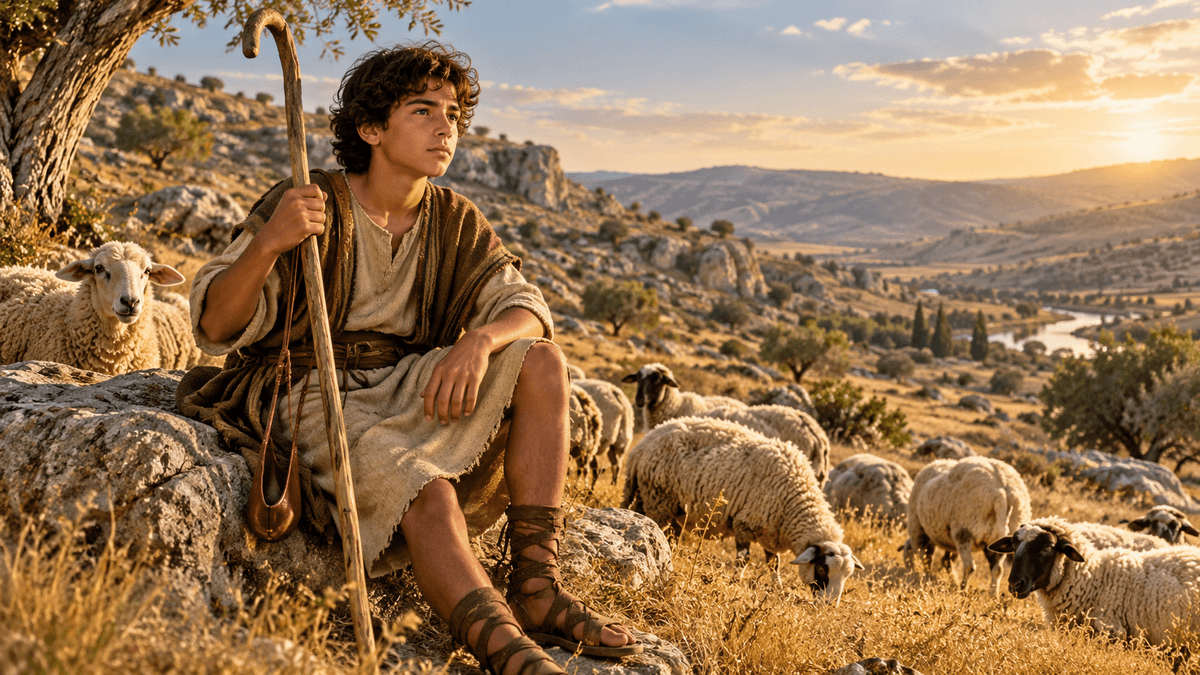
David was anointed to become king while he was still a young shepherd, but he did not immediately ascend the throne. Before the palace, there was the pasture. Before there was Goliath, there were the lion and the bear. Before David led armies, he learned to care for sheep when almost no one was watching. In 1 Samuel 17:34–37, David told Saul, “Thy servant kept his father’s sheep,” and described how God delivered him from the lion and the bear. David's public victories were connected to lessons he learned in private. Even after Samuel anointed him, David endured years of waiting, warfare, rejection, and persecution before finally becoming king. His platform did not arrive immediately after his anointing.
Joseph likewise received prophetic dreams about his future when he was young, but they did not fulfill themselves overnight. Between the dream and the palace, Genesis 37–41 shows the pit, slavery, false accusation, and prison. Joseph had to learn stewardship, discipline, restraint, wisdom, forgiveness, and faithfulness before he could govern Egypt. What seemed like delay was development. Psalm 105:19 says concerning Joseph, “Until the time that his word came: the word of the LORD tried him.” His promise required preparation.

God has different seasons in which He prepares us for the assignments and platforms He intends to entrust to us. Preparation may happen in obscurity, under leadership, through service, correction, disappointment, waiting, or responsibilities that seem insignificant. Zechariah 4:10 warns us not to despise “the day of small things.” Small beginnings often become God's classroom for greater responsibility. Jesus in Luke 16:10 expressed this same principle when He said, “He that is faithful in that which is least is faithful also in much”.
When someone continually tries to jump ahead of God's process and obtain the platform before allowing God to develop the person, that individual may eventually receive visibility but lack the spiritual capacity to sustain it. A person's gift may take them into a room that their character is not mature enough to remain in. If rebellion, complaining, pride, disobedience, disrespect toward leadership and authority, jealousy, impatience, uncontrolled anger, or other destructive attitudes remain unchecked within a person, a larger platform may magnify what already exists within the heart.
This is why developing the fruit of the Spirit is essential. Galatians 5:22-23 identifies that fruit as love, joy, peace, longsuffering, gentleness, goodness, faith, meekness, and temperance. Spiritual maturity is demonstrated not only by how powerfully someone ministers publicly; it is also revealed by how Christlike that person behaves privately and in relationships.
WHEN CHARACTER IS NOT READY FOR THE PLATFORM
Scripture also provides sobering examples of people whose character deficiencies affected their ability to carry responsibility. King Saul is one such example. Saul possessed the outward appearance people associated with leadership. He was physically impressive, and 1 Samuel 9:2 describes him as handsome and taller than those around him. Yet weaknesses in his character became increasingly evident after he became king. 1 Samuel 13:8-14 shows that he acted presumptuously by offering the sacrifice instead of waiting for Samuel, and later, in 1 Samuel 15, he disobeyed God's command concerning Amalek. When confronted, Saul attempted to justify his actions. His insecurity eventually developed into jealousy toward David, and his jealousy led him into destructive behavior. Saul had the throne, but it exposed what remained unresolved within him.
Cain also demonstrates the danger of refusing God's correction. When Cain became angry because God did not accept his offering while He did accept Abel's, God confronted him before the situation escalated. In Genesis 4:6-7, the Lord asked Cain, “If thou doest well, shalt thou not be accepted?” and warned him that sin was lying at the door. Cain could have corrected his attitude and mastered the destructive emotions rising within him. Instead, he allowed anger, jealousy, resentment, and hatred to dominate his heart, eventually murdering his brother Abel (See Genesis 4:8). The tragedy did not begin with murder, but it began with an inward condition that Cain refused to address.

David's oldest brother, Eliab, provides another important example. When Samuel came to Jesse's house to anoint the next king, Eliab's appearance immediately impressed him. Samuel thought, “Surely the LORD’s anointed is before him.” But God responded in 1 Samuel 16:6-7, “Look not on his countenance, or on the height of his stature… for man looketh on the outward appearance, but the LORD looketh on the heart”. Later, in 1 Samuel 17:28, when David arrived at the battlefield where Goliath challenged Israel, Eliab reacted angrily and accused David of pride and wrong motives. The person who looked most kingly from the outside was not necessarily the person God had chosen.
The same principle holds today. Someone may preach marvelous sermons, prophesy accurately, sing beautifully, lead dynamically, build a successful ministry, or attract thousands of followers, yet lose control when someone disagrees, challenges them, or tries to correct them. We now live in an age where ministry influencers can build brands faster than they build disciples. Sometimes disrespect, pride, unhealthy ambition, complaining, inability to receive correction, and dishonor toward authority are overlooked simply because the ministry appears to be “working.” The person's charisma covers the character deficiencies, and visible success becomes the justification for ignoring invisible problems.
But Jesus warned that supernatural activity and outward ministry success are not, by themselves, evidence of a right relationship with God. In Matthew 7:22-23, He spoke of people who said they had prophesied, cast out demons, and performed many wonderful works in His name, yet He declared that He never knew them. This should sober every person involved in ministry. Giftedness is not the same thing as godliness. Anointing is not permission to neglect character. Public effectiveness does not excuse private disobedience.
The problem today is that platforms can grow very quickly, especially through social media, technology, livestreaming, podcasts, conferences, and online ministries. A person can become widely known within months. Character, however, is formed over time. It is developed through obedience, submission, testing, correction, patience, adversity, repentance, service, and daily fellowship with God. James 1:3-4 reminds us that “the trying of your faith worketh patience” and that patience must have its perfect work so that we may become mature and complete. We often celebrate a person's gift while ignoring the gaps in that person's character, but God is interested in developing both.
WHAT DOES GOD LOOK FOR BEFORE INTRUSTING SOMEONE WITH MORE?
So, what does God look for in a person before entrusting them with greater influence, responsibility, or a platform? My friends, no particular personality type, family background, charisma, educational experience, or natural ability automatically qualifies someone for spiritual leadership. In Christendom, people sometimes associate leadership ability and readiness for a platform with aggression, outspokenness, extensive experience, charisma, confidence, or dynamism. Yet biblical leadership often looks very different. God's primary concern is the condition of the heart and the person's character.
Sincere faith and trust in God are foundational. God desires people who genuinely depend upon Him for strength, wisdom, direction, and provision rather than relying solely upon their own intelligence or abilities. Proverbs 3:5-6 instructs us to trust in the Lord with all our heart and not lean upon our own understanding, but to acknowledge Him in all our ways so that He may direct our paths. Anyone entrusted with spiritual responsibility must learn to depend on God.
Humility and obedience are equally important. God seeks people who are willing to listen, follow His direction, and surrender their personal ambitions and plans to His will. Abraham provides a powerful example. In Genesis 12:1-4, when God called him to leave his country and go to a land that He would show him, Abraham obeyed. Hebrews 11:8 states, “By faith Abraham, when he was called to go out into a place which he should after receive for an inheritance, obeyed.” Obedience sometimes requires moving before we understand everything God is doing. 1 Samuel 15:22 reminds us that “to obey is better than sacrifice.”
Integrity and pure motives also matter deeply to God. He examines the “why” behind our actions. Are we serving because we genuinely love God and people, or because we desire recognition? Are we pursuing ministry because God has called us, or because we want a title, status, applause, followers, or influence? Psalm 139:23-24 provides a powerful prayer for every believer: “Search me, O God, and know my heart… and see if there be any wicked way in me.” Character requires allowing God to examine not only our actions but also our motives.
God also looks for a receptive spirit and genuine repentance. Spiritual maturity does not mean a person never makes mistakes. It means that when God brings conviction or correction, that person is willing to respond. David committed serious sins, but one distinction in his life was his capacity to repent when confronted. In 2 Samuel 12:13, after Nathan exposed his sin with Bathsheba and Uriah, David said, “I have sinned against the LORD.” Psalm 51 records the depth of his repentance: “Create in me a clean heart, O God; and renew a right spirit within me” (Read Psalm 51:10). God can continue to shape a person who remains sensitive to conviction.
Love for God must remain at the center of everything we do. Jesus identified in Mark 12:29-30 loving God with all our heart, soul, mind, and strength as the greatest commandment. Ministry without love for God eventually becomes performance. Service without intimacy eventually becomes obligation. A platform should never replace the secret place. Our public ministry should overflow from our private relationship with God.
Finally, we must remain teachable. A teachable heart is willing to receive instruction, correction, wisdom, and guidance. Scripture contains numerous examples of relationships through which people were prepared for greater responsibility. Moses prepared Joshua, and Joshua served alongside Moses before leading Israel (Read Exodus 24:13 and Numbers 27:18–23). Elisha followed and served Elijah before receiving the prophetic mantle (See 1 Kings 19:19–21; 2 Kings 2:1–15). Esther listened to Mordecai's counsel during one of the most critical moments of her life (Read Esther 4:13–17). Proverbs 12:1 teaches that whoever loves instruction loves knowledge. When we become too important to be corrected, we have already become spiritually vulnerable.
BUILD THE CHARACTER NOW
Everything we possess ultimately comes from God. He entrusts us with our gifts, talents, abilities, opportunities, creativity, influence, and spiritual gifts. James 1:17 declares, “Every good gift and every perfect gift is from above”. He created us, and when we receive Jesus Christ as Lord and Savior, we must continually allow the Holy Spirit to shape and transform our character. Romans 8:29 reveals that God's purpose includes conforming us to the image of His Son. Therefore, Christianity is not merely about discovering our gifts; it is about becoming like Christ.
This is why we must build character now, even when nobody is watching. Be faithful in the small assignments. Be faithful in the hidden seasons. Be faithful when there is no applause, title, microphone, invitation, audience, or recognition. Learn how to serve. Learn how to submit to godly authority. Learn how to receive correction without becoming offended. Learn how to celebrate others without becoming jealous. Learn how to obey when obedience is inconvenient. Learn how to remain humble when God begins opening doors. And learn how to maintain integrity when compromise would be easier.
Jesus said in Luke 16:10, “He that is faithful in that which is least is faithful also in much.” Before seeking greater visibility, ask God for greater capacity. Before asking for influence, ask Him to purify your motives. Before praying for a larger platform, allow Him to enlarge your character. Before asking God to expose you to nations, let Him expose the areas in your heart that still need transformation.
The platform may come sooner than you expect. Opportunities may arise. Doors may open. Your gift may make room for you, and people may begin to recognize what God has placed upon your life. But when that day comes, charisma alone will not keep you standing. It will not be followers, titles, applause, talent, or gifting. Character is what enables you to carry what the platform brings.
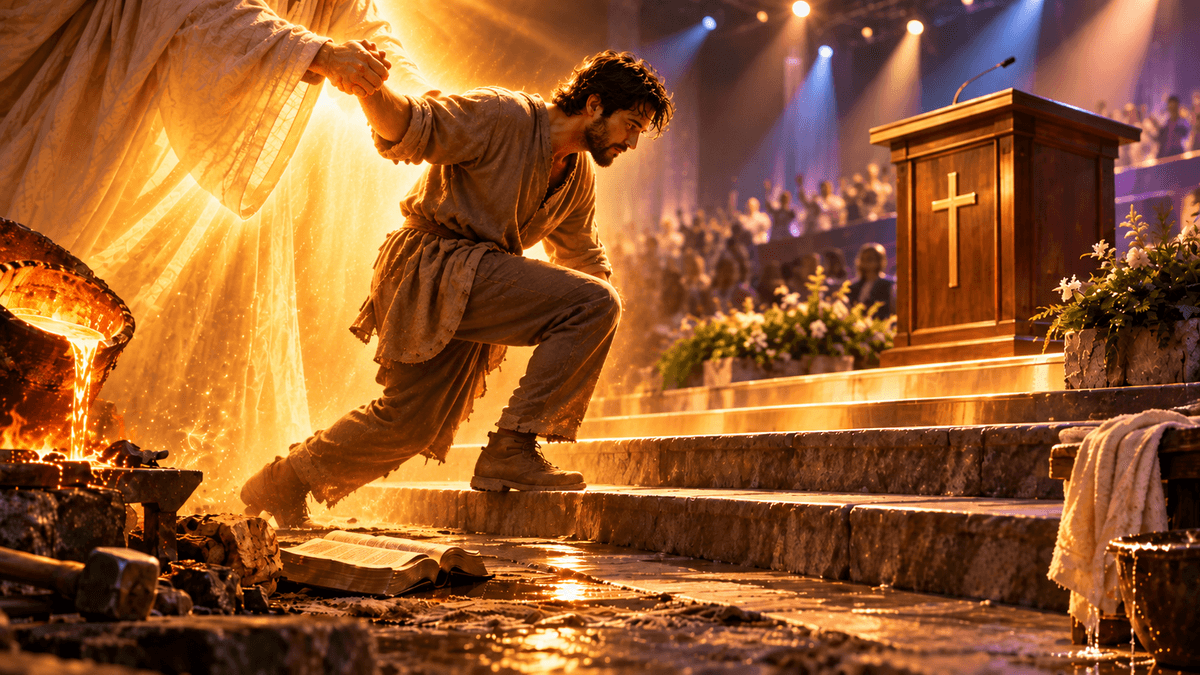
Allow God to prepare the person before He expands the platform. Let Him develop your heart before increasing your influence. Let Him establish your integrity before enlarging your territory. Let Him form Christ in you in the secret place, because what God develops privately will determine how you stand publicly.
Build the character now. Be faithful when nobody is watching. Honor the seasons of preparation. Do not despise the wilderness, the pasture, the prison, the waiting, or the small beginnings. God may be using them to prepare you for something greater.
The platform may be coming, but make sure the person God places upon it is ready to stand.
Closing Prayer
Heavenly Father, thank You for every gift, calling, opportunity, and assignment You have placed within our lives. Thank You that You are not only concerned about what we accomplish for You, but also about who we are becoming in You. Search our hearts, O God, and reveal every attitude, motive, habit, and weakness that does not reflect Christ's character.
Lord, prepare our character before You enlarge our platform. Teach us to value the hidden seasons, the small beginnings, the wilderness experiences, and the places of preparation where You shape us when no one else is watching. Give us the grace to remain faithful in little, obedient in difficulty, humble in promotion, and teachable when correction comes.
Remove from us every spirit of pride, jealousy, rebellion, impatience, dishonor, selfish ambition, and the desire for recognition. Purify our motives so that our service is never about building our own name, but about glorifying Yours. Produce within us the fruit of the Spirit: love, joy, peace, patience, kindness, goodness, faithfulness, gentleness, and self-control.
Father, help us never let our gifts grow faster than our character. Give us the spiritual capacity to carry every opportunity You entrust to us. If any areas of our lives are not ready for greater responsibility, lovingly correct us, mature us, and strengthen us. Give us hearts that repent quickly, receive instruction willingly, and remain sensitive to the Holy Spirit's voice.
Teach us to love the secret place more than the public platform, Your presence more than recognition, obedience more than applause, and intimacy with You more than influence with people. May everything we do publicly flow from a life first cultivated privately in Your presence.
Lord, when doors begin to open, keep us humble. When influence increases, keep us dependent upon You. When people celebrate the gift, remind us that every perfect gift comes from above. May our lives always point others to Jesus Christ and never to ourselves.
Create in us clean hearts, O God, and renew right spirits within us. Make us vessels of honor, prepared and useful for Your purposes. May we be faithful stewards of every platform, ministry, relationship, and opportunity You place in our hands.
Prepare us before You promote us. Develop us before You display us. Strengthen our character so that when the platform comes, we will have the grace, wisdom, humility, and integrity to stand.
In Jesus’ name,
Amen.
Author: Kimberly A.S. Williams